
A suitable operator should combine fair terms, secure payments, reliable withdrawals and responsible gambling controls. These factors matter just as much as the percentage shown beside a casino option.
What RTP means in online casino use
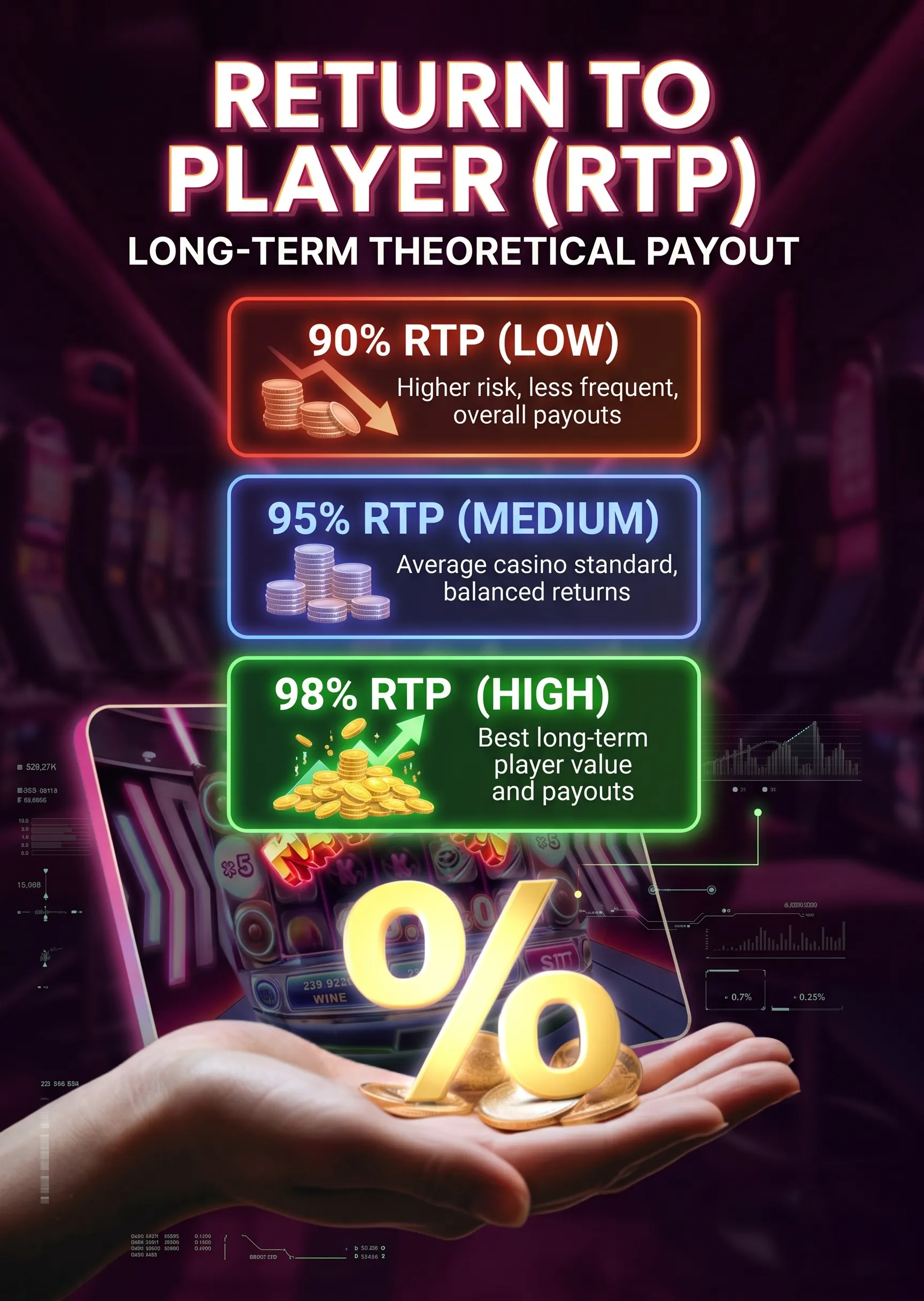
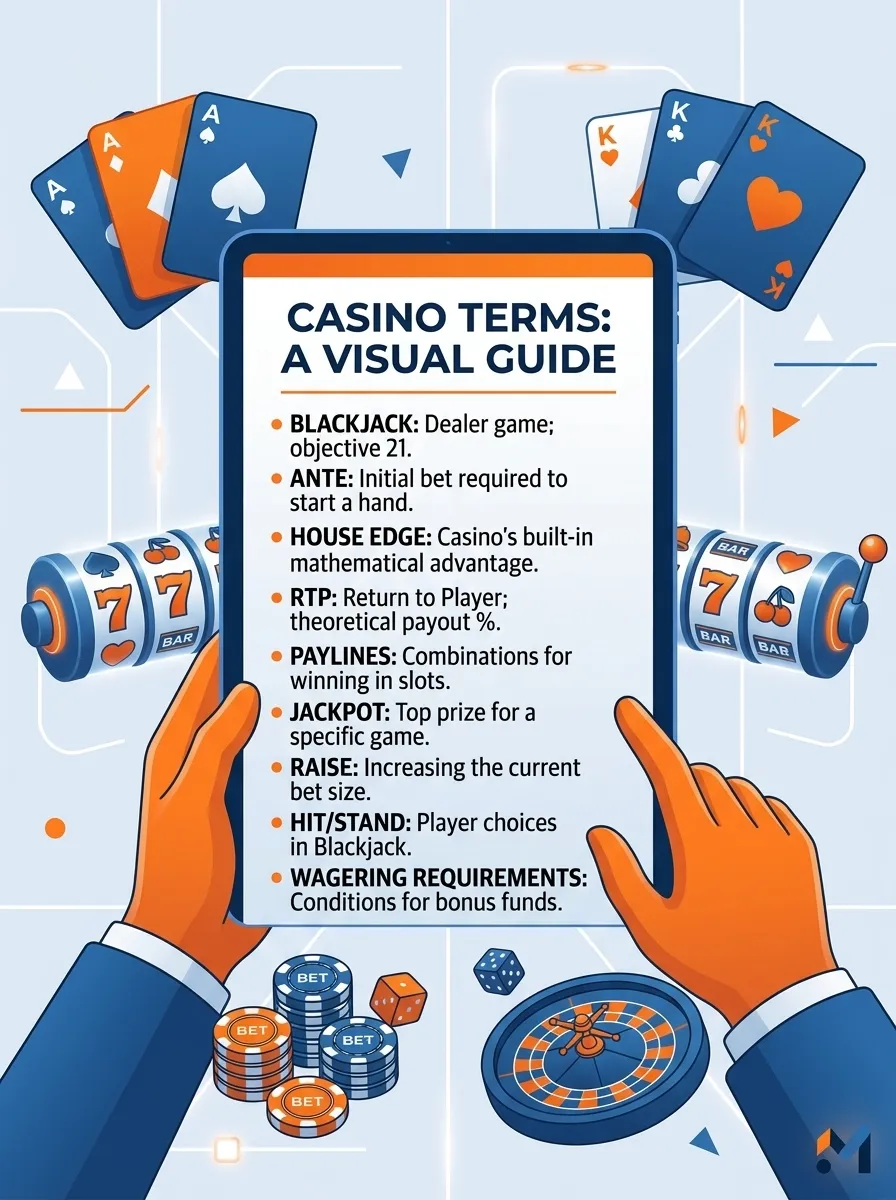
RTP stands for return to player. It is shown as a percentage and represents the theoretical amount that would be returned to participants over a very large number of rounds.
An RTP of 96% means that, over the full mathematical cycle, the casino option is designed to return an average of €96 from every €100 placed. The remaining €4 represents the theoretical advantage held by the operator.
This does not mean that a person who places €100 will receive €96 back. One session may end with a larger return, a smaller return or no return at all. RTP only becomes meaningful across a very large amount of activity.
The percentage is therefore useful for comparison, but it should never be treated as a personal forecast. Every adult should set a spending limit before taking part and should be ready to lose the full amount set aside.
Why short sessions can produce different results
Short-term outcomes often differ greatly from the published RTP. This happens because each eligible result is produced independently under the mathematical structure used by the casino option.
A person may experience several losing rounds in a row even when the RTP percentage is high. Another person may receive a strong return during a short period. Neither result changes the long-term percentage.
RTP does not move up or down to repay one account. It also does not remember earlier results. A losing period does not mean that a return is about to happen, and a recent return does not mean that the next round will be weaker.
This is important because some people continue for longer when they believe the percentage must soon balance itself. That belief can lead to higher spending and extended sessions. The published figure describes long-term mathematics, not a repayment schedule.
How house edge relates to RTP
House edge is the part of the mathematical return that remains with the operator over time. RTP and house edge add up to 100%.
| RTP Percentage | Theoretical House Edge | Total |
|---|---|---|
| RTP Percentage96% | Theoretical House Edge4% | Total100% |
| RTP Percentage97% | Theoretical House Edge3% | Total100% |
The calculation is:
House edge = 100% minus RTP
A one-percentage-point difference may appear small, but it can matter across a large amount of total activity. However, the difference may not be noticeable in a short session because individual outcomes can vary widely.
The lower house edge does not remove risk. It only shows that one option has a slightly stronger long-term mathematical return than another, assuming all other conditions are equal.
Why RTP percentages may differ
The same casino option can sometimes be offered with more than one RTP setting. A supplier may provide several mathematical versions, and an operator may choose which version to make available.
This means a percentage found on another platform may not apply to the option offered through a particular account. The design and features may look alike even when the mathematical return is different.
Regional settings can also affect which version is offered. A version used in the Netherlands may not match one supplied in another market.
Adults should locate the percentage linked to the exact version available through their account. It may appear in the rules area, help section, pay details or title menu. Where the figure is not easy to find, support staff may be asked to confirm it in writing.
How volatility changes account balance movement
Volatility describes how returns may be spread across a session. It does not replace RTP, and it does not show the total theoretical return on its own.
A lower-volatility structure may produce smaller returns more often. A higher-volatility structure may produce longer periods with little return, followed by less frequent but larger outcomes.
Two casino options can have the same RTP while creating very different account experiences. One may keep the balance moving in smaller steps, while another may cause larger rises and falls.
This matters when setting a budget. A high-volatility structure can use a balance quickly, even when the RTP percentage appears competitive.
RTP explains how much is theoretically returned over time. Volatility explains how uneven that return may feel during use. Both should be considered before deciding how much money and time to set aside.
What a higher RTP can and cannot offer
A higher rtp can indicate stronger long-term mathematical expectations, but it does not guarantee profit, regular returns, or a successful withdrawal.
A percentage of 97% is theoretically better than 95% when every other factor is the same. In practice, other conditions can change the overall account experience. These include stake limits, promotional terms, withdrawal rules, payment charges and verification steps.
A high percentage cannot promise a return during every session. It cannot recover earlier losses, remove volatility or make casino activity risk free. It also cannot protect a person who continues beyond a planned limit.
The most useful approach is to treat RTP as one part of a wider comparison. Adults should also consider legal access, account protection, payment reliability and responsible gambling tools.
What to check before creating an account
Before opening an account, adults should confirm whether the operator accepts participants from the Nederlands and whether it operates under a suitable licence.
The operating company should be identified, along with the authority responsible for its licence. Payment methods, withdrawal limits and account verification steps should also be explained before funds are transferred.
RTP figures should be available for the casino options offered through the account. The operator should also state whether different mathematical versions may be used.
Other important areas include bonus conditions, customer support, login security and responsible gambling controls. When these details are difficult to locate or understand, the account may be harder to manage later.
A strong RTP figure should not outweigh weak withdrawal terms or missing account safeguards. The full account structure should support the final decision.
Why licensing matters in the Nederlands
Licensing helps establish which company is responsible for the service and which rules apply to its operation.
An authorised operator is expected to follow requirements linked to age checks, identity checks, payments, advertising and responsible gambling. It should also provide account controls that help adults manage spending and time.
A licence does not remove financial risk, but it can provide a formal route for complaints and regulatory action. It also helps adults confirm whether the operator is allowed to serve people in the Netherlands.
A licence logo should not be accepted on its own. The company and licence details should be checked through the relevant authority, where possible.
Adults should establish legal access before registration. An attractive RTP percentage does not make an operator suitable when its legal position is uncertain.
How bonuses can affect practical value
Promotions can change the way funds are used. A bonus may come with wagering requirements, expiry limits, maximum stakes and withdrawal restrictions.
For example, a €50 bonus with a 30-times wagering requirement on the bonus creates €1,500 in required activity. If the same multiplier applies to both a €50 deposit and a €50 bonus, the required amount becomes €3,000.
The RTP percentage does not remove these conditions. A high theoretical return can still be affected by a large wagering target or a short expiry period.
Some casino options may contribute fully towards wagering, while others may contribute at a lower rate or not at all. The operator may also limit how much promotional value can become withdrawable cash.
A bonus should only be accepted when the full terms fit the person’s normal budget and planned account use.
Why wagering terms need close attention
Wagering terms show how much eligible activity must be completed before promotional funds can become available for withdrawal.
The multiplier alone is not enough. Adults should also check whether it applies to the bonus, the deposit, or both. They should examine the maximum allowed stake, eligible activity and expiry period.
A high wagering requirement can use a balance before completion. A short expiry period may also create pressure to continue for longer than planned.
Adults should not increase spending or extend a session only to finish a promotional requirement. It may be better to leave the offer unfinished than to cross a personal limit.
The most useful bonus is not always the one with the largest amount. Lower wagering, a fair validity period and fewer restrictions may offer a more manageable structure.
How withdrawals should be assessed
Withdrawal terms are as important as RTP. A high percentage offers little practical value when eligible funds are difficult to receive.
Operators may set minimum withdrawal amounts and daily, weekly or monthly limits. Larger balances may be paid in several parts. A request may also pass through pending, approval, processing and payment stages.
The operator’s stated time may begin after approval rather than when the request is submitted. Payment providers can add further processing time.
Adults should check whether fees apply, whether currency conversion is involved and whether the original deposit route can receive withdrawals.
Verification may be required before the first payment is released. Bonus use can add further checks, especially when wagering or maximum withdrawal limits apply.
These conditions should be examined before depositing rather than after a request has been made.


How payment methods influence account use
Payment methods can affect deposit speed, withdrawal access, fees and verification.
A method used for deposits may not support outgoing payments. In that case, the operator may require a bank transfer or another approved route for withdrawals.
The payment account should usually belong to the same person who owns the casino account. Using another person's card, bank account or digital wallet can lead to delays, rejected transactions or account restrictions.
Adults should check minimum and maximum transaction amounts before transferring funds. Currency conversion may also apply when the account uses a different currency.
Receipts, transaction references and payment confirmations should be kept until the balance update or withdrawal is complete. These records can help support staff trace a delayed transaction.
Why identity verification is required
Identity verification helps an operator confirm age, personal details, payment ownership and, where needed, the source of funds.
Requested documents may include government-issued identification, proof of address and evidence linked to the payment method. Further records may be requested when transaction levels increase or when account activity requires additional checks.
The details entered during registration should match the submitted documents. Differences in spelling, date of birth or address can delay approval.
Documents should only be sent through the operator's approved upload route. Passwords, full card security codes and temporary authentication codes should never be shared.
Verification can happen during registration, after a deposit or before a withdrawal. Completing the requested steps early can reduce delays when eligible funds are requested.
How secure account access should work
Account security protects personal details, payment records and account balances.
The operator should use encrypted connections for login and transaction activity. Adults should confirm that they have reached the correct domain before entering personal or payment details.
A unique password should be used for the casino account. Reusing a password from email, banking or social media increases the risk if one service is compromised.
Two-factor authentication can add another layer of protection. Login alerts, device checks and withdrawal confirmations can also help detect unusual activity.
Shared devices should not store login details. Accounts should be signed out after use, and public wireless networks should be avoided when entering financial data.
Unexpected password changes, login alerts or transactions should be reported to support staff as soon as possible.
What mobile account access should include
Mobile access should provide the main account functions available on a desktop device.
Adults should be able to sign in securely, check balances, locate RTP figures, manage payments, follow verification progress and use responsible gambling controls from a supported phone or tablet.
Important terms should remain easy to reach on smaller screens. Payment forms and account menus should work properly without hiding key limits or conditions.
A device passcode, biometric lock and current operating system can strengthen security. Login details should not be saved on a shared phone or tablet.
Mobile access can make account use more convenient, but it can also make sessions easier to extend. Time reminders and planned breaks remain useful when taking part through a mobile device.
How affiliate links may influence placement
An affiliate platform may receive payment when a visitor follows a referral link and completes a qualifying action with an operator.
This arrangement does not normally change the rtp attached to the casino account. However, it may influence which operators receive more attention or a higher position in the content.
Adults should focus on factors that can be checked directly. These include licence status, RTP configuration, payment terms, withdrawal rules and responsible gambling controls.
Commercial relationships should be disclosed so visitors understand how referrals work. Payment to an affiliate should not be treated as proof that an operator suits every person.
The final choice should be based on personal limits, legal access and the full account conditions.
Common errors when comparing RTP
A frequent mistake is choosing an operator only because it shows the highest percentage. RTP matters, but it does not cover the full account experience.
Another mistake is assuming that every version uses the same percentage. Adults may also ignore volatility, bonus wagering, withdrawal limits or payment fees.
Chasing losses is one of the most serious errors. Increasing stakes after a losing period does not improve the mathematical chance of recovery. Previous results do not force later outcomes to change.
Borrowed money should never be used for casino activity. Essential funds for housing, food, bills, transport, savings or debt should also remain separate.
The safest comparison is one that combines RTP with account security, payment access, legal status and personal spending limits.
A practical way to compare operators
A measured process can help adults avoid rushed decisions.
First, confirm that the operator can legally accept people from the Nederlands. Identify the company, licence and available account controls.
Second, locate the RTP percentage linked to the exact version offered. Do not rely only on a figure shown elsewhere.
Third, examine deposits, withdrawals, transaction limits and possible fees. Check which documents may be required for verification.
Fourth, assess any bonus separately. Calculate the full wagering target and note the expiry period, stake limit and withdrawal cap.
Finally, set a fixed budget and time limit before transferring funds. Do not raise either limit because of a promotion or a losing period.
Responsible gambling and personal limits
Casino activity should be treated as paid entertainment, not as a way to earn a regular income.
A fixed budget should be set before each session. This amount should be affordable to lose and should not affect household costs, savings or debt payments.
Time limits are also important. A planned stopping point, session reminder or temporary break can help prevent extended activity.
Adults should stop when the spending or time limit is reached. They should not continue to recover losses, complete wagering or reach a theoretical RTP average.
Account controls may include deposit limits, spending limits, session reminders, temporary breaks and self-exclusion. These tools can support better control when used before problems grow.
Support should be sought when casino activity causes financial pressure, secrecy, sleep problems, relationship conflict or difficulty stopping.
Conclusion
Beste RTP online casino Nederland helps adults understand how RTP percentages can support a more measured casino comparison. A higher percentage may offer stronger long-term mathematics, but it does not guarantee a return from one session. Individual outcomes can still vary because RTP is calculated across a very large amount of activity rather than a single account.
A suitable operator should also provide secure payments, dependable withdrawal procedures, fair promotional terms, account protection and responsible gambling controls. Licensing, verification requirements, transaction limits and customer support should be considered alongside RTP before registration or any financial commitment.
Personal spending and time limits should remain the main priority. Adults should only use money they can afford to lose and should avoid chasing losses or extending sessions to reach a theoretical percentage. By combining RTP knowledge with careful account management, players can make a more balanced decision and maintain realistic expectations throughout their casino activity.